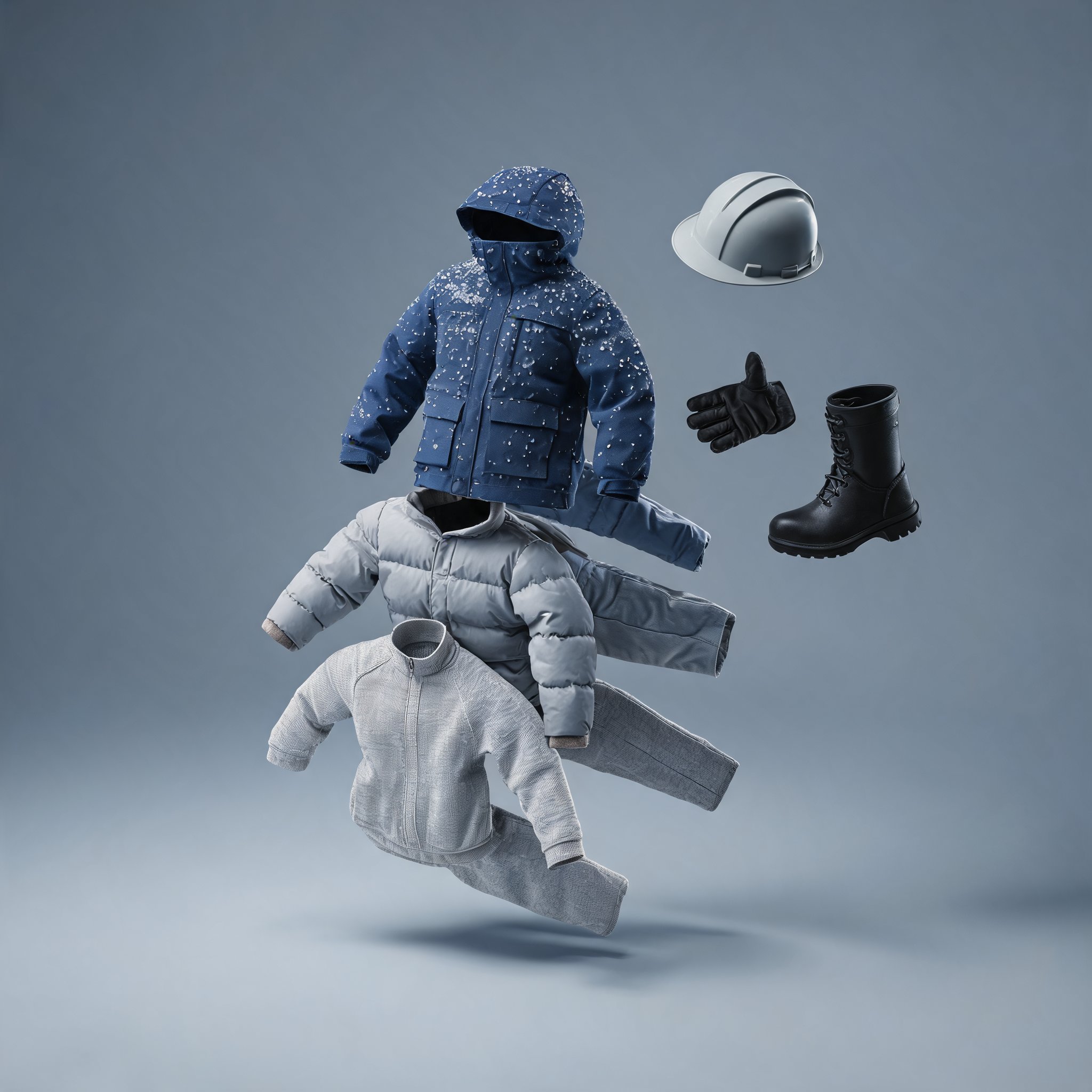
Outdoor assignments in winter increase the risk for employees when personal protective equipment is combined or selected incorrectly, according to guidance published by CWS Workwear International GmbH of Dreieich. The workwear supplier names five typical protection gaps that it says arise in winter use.
The company notes that shorter days, wetness and frost change the hazard situation at many outdoor workplaces, often without any corresponding adjustment to personal protective equipment (PPE). Cold, damp conditions and reduced daylight alter what workers face during a shift, while the clothing issued may stay the same as in milder seasons.
According to the guidance, the gaps arise above all from the interplay between clothing layers. Individual garments may carry the required certification, yet the combination actually worn does not fulfil the requirements of the relevant standards. In that case, the protective function that each single item is certified to deliver is not assured for the outfit as assembled.
Combination rather than single item
The point shifts attention from the individual product to the layered system. Confirming that a jacket, an underlayer or a pair of trousers is certified says little about the protection provided when they are worn together, the company argues. Its guidance is therefore framed around combinations that can leave workers exposed despite certified components.
CWS Workwear states that it has identified five typical gaps of this kind. The recommendations are addressed to those who plan and issue winter PPE for outdoor work, where the equipment has to cope with moisture, cold and the short periods of daylight typical of the season.