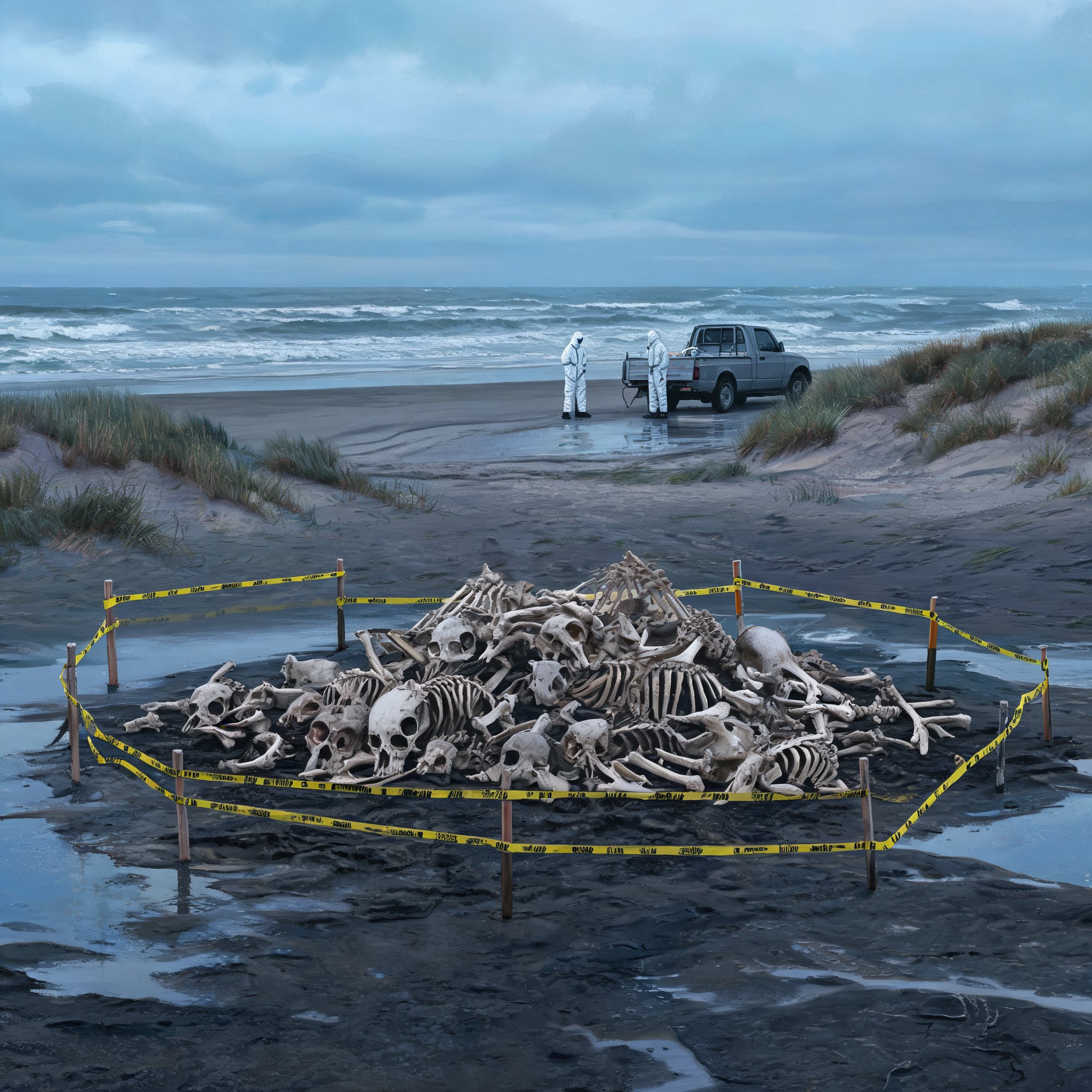
Louth County Council is preparing a clean-up operation at Rathcor Beach in County Louth after about six tonnes of adult cattle bones were found illegally dumped at the site.
The council told Agriland that it was notified last week of the dumping of a significant quantity of animal bones. Council staff attended the scene and carried out an assessment. A spokesperson said dumping animal remains on this scale was a serious criminal act and could have public health and environmental implications.
Because the site is remote and difficult to access, the council said careful planning was needed to ensure the waste could be removed safely. Members of the public have been advised to avoid the area while the material remains in place and to keep dogs away until the clean-up is completed.
The Department of Agriculture, Food and the Marine (DAFM) said it was working with the council on the incident. A local departmental veterinary inspector is providing advice on disposal of the bones, which DAFM described as animal by-products. The department said disposal of animal by-products is strictly governed by EU and national legislation, and council enforcement officers are investigating the origin of the material.
An Garda Síochána confirmed that gardaí attended the scene after a report of the discovery of animal remains at Rathcor, Dundalk, on 11 November. Sinn Féin councillor for the Dundalk/Carlingford area Antóin Watters told Agriland on 19 November that the illegal dumping was disgraceful. He said people were very concerned and took great pride in the area, and that they did not want to see it happen again.