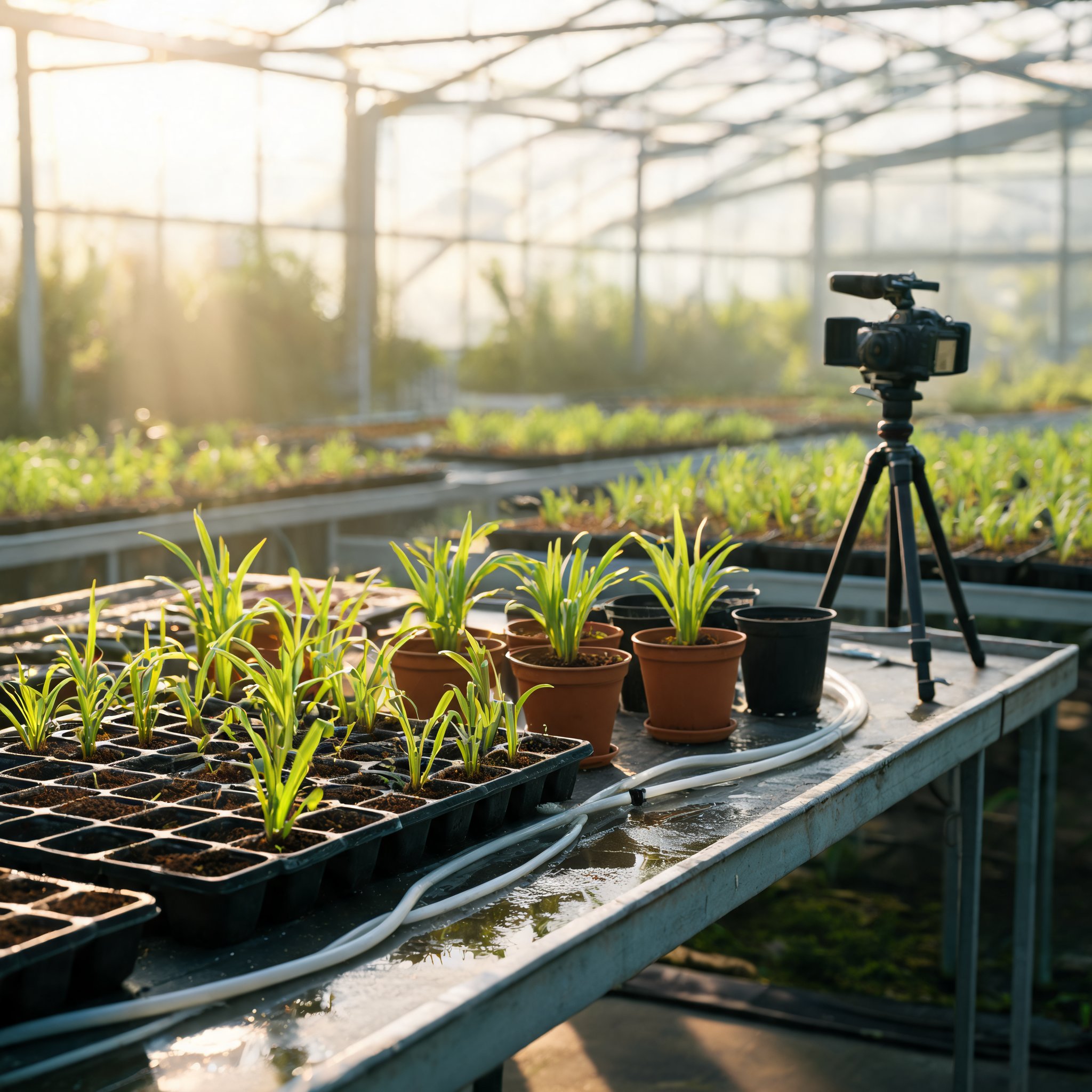
Greenhouse Grower has highlighted a video series from Darwin Perennials that examines greenhouse production of Hemerocallis, commonly called daylilies. The series features Chris Fifo and Darren Barshaw of Darwin Perennials, who take a detailed look at the crop’s production process.
Three installments have been published so far, each covering a separate topic.
- Part 1: Receiving and transplant care.
- Part 2: Finishing for retail.
- Part 3: Planting in September.
The videos and more can be found on the Darwin Perennials YouTube channel. Greenhouse Grower describes its spotlight as occasional and focused on the controlled-environment industry, with topics ranging from crop protection advice to insider views of plant production at greenhouse operations across the country.
The publication also invites submissions of videos for possible inclusion in its spotlight. It asks whether readers have recently produced a video they want highlighted and directs interested parties to send a link to Greenhouse Grower Multimedia Specialist Nick Matysik.
For readers viewing the embedded videos, the article notes that accepting cookies may be required; it advises clicking the icon in the bottom-right corner of the screen. It also provides links to each of the three published parts, and the submission notice includes an email address for sending video links.