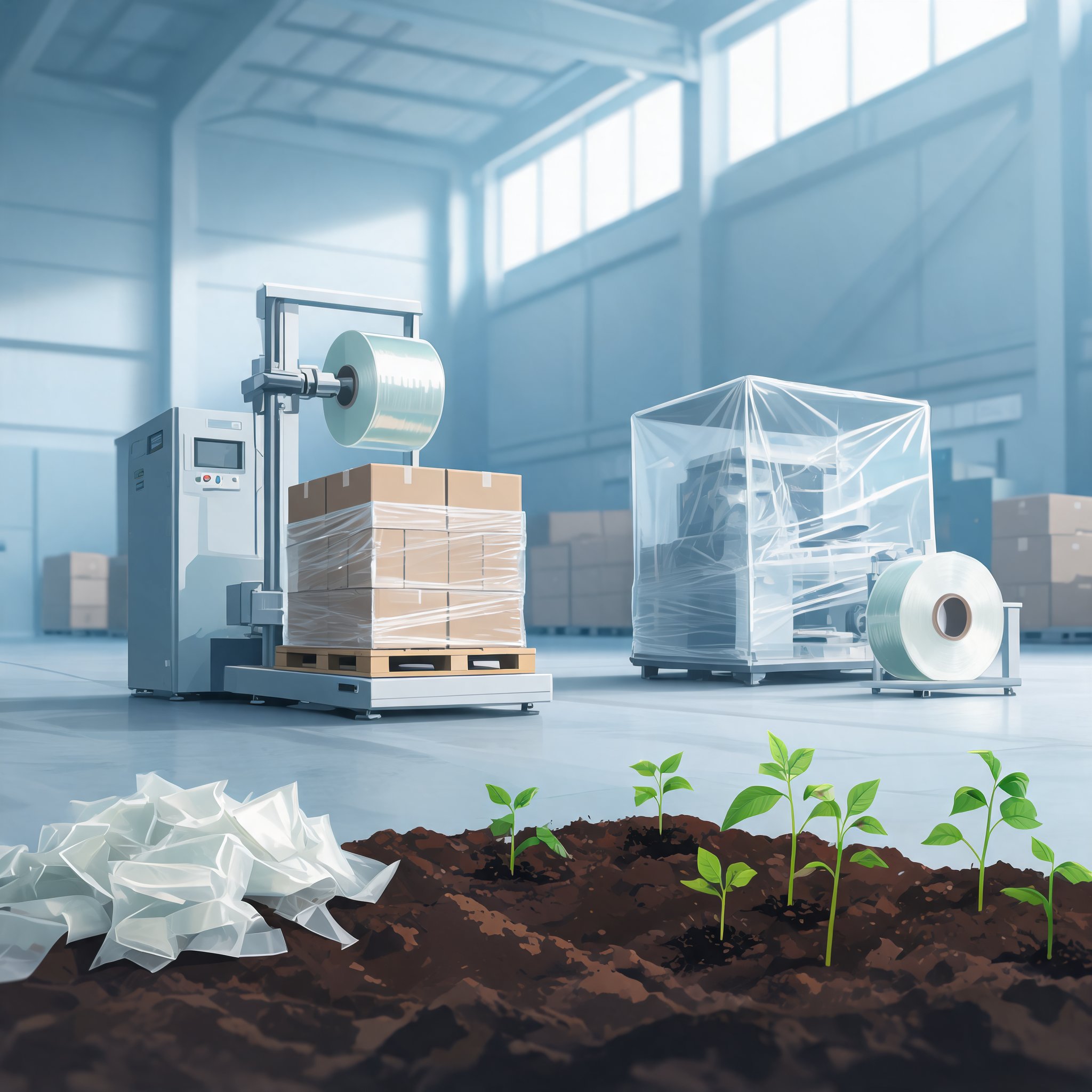
EcoCortec, the European subsidiary of Cortec Corporation, has developed two certified compostable packaging films for heavy-duty industrial use: EcoShrink and EcoWrap. The films are manufactured in Croatia and are intended as direct replacements for conventional polyethylene stretch and shrink film, allowing operations teams to keep existing wrapping equipment and packaging workflows while pursuing waste-reduction targets.
The products address a persistent problem in manufacturing and logistics. Single-use polyethylene film is a major source of unrecyclable plastic waste, and facilities use large volumes of stretch and shrink film for load containment and inventory staging. Rising disposal fees, carbon reporting requirements and regional plastic surcharges are increasing pressure on plant managers to find bio-based alternatives that can run on standard packaging lines. Early bio-based films often lacked the mechanical strength needed for automated pallet wrappers, leading to tears and load failures in transit, according to the company.
Two films, different packaging roles
EcoShrink is designed for heat-shrinking oversized equipment and smaller components. It is formulated with 45 percent biopolymers sourced from certified commercially compostable resins. When standard heat is applied, the film shrinks evenly to form a protective barrier against dust, dirt and moisture, which the company says helps protect products during transit and extended outdoor yard storage. EcoCortec also says the film remains structurally stable under normal storage conditions and begins breaking down only when exposed to an industrial composting environment.
EcoWrap is aimed at palletizing and cargo bundling. EcoCortec describes it as the first commercially available compostable, industrial-strength stretch film. It is certified “OK compost INDUSTRIAL” by TÜV Austria under EN 13432 and ASTM D6400. The film uses a specialized tackifier formulation intended to provide the cling and stretch elasticity needed for standard automated wrapping equipment without machine retrofits or workflow adjustments. The company says its high tensile strength allows operators to secure heavy pallet loads with fewer wraps than conventional stretch film, reducing material consumption per unit shipped and helping mitigate plastic taxes and landfill surcharges.
End-of-life and applications
EcoWrap is designed for commercial composting facilities, while EcoShrink is formulated to break down in an industrial composting environment. EcoCortec says EcoWrap breaks down alongside organic waste into nutrient-rich soil suitable for agricultural use. The company positions the films for manufacturing, e-commerce, agriculture and logistics operations, where stretch and shrink wrapping remain essential for load stability and shipping protection.
The broader argument is that used packaging can be routed to local commercial composting facilities instead of waste compactors. That would allow packaging engineers and logistics managers to pursue corporate waste-reduction targets without sacrificing load integrity or product protection, the company says. The extent to which the films deliver those benefits in practice will depend on access to commercial composting facilities and performance on individual packaging lines.