Mitsui Chemicals, Inc. has signed an agreement to acquire JSR Corp. from investment funds managed by JIC Capital, Ltd. The transaction is valued at ¥1.84 trillion, or $11.6 billion, including debt, and would make JSR a consolidated subsidiary of Mitsui Chemicals.
Mitsui Chemicals will buy all JSR common shares held by JIC PEFJ1 Limited Partnership and JIC PEF1 Limited Partnership, jointly with Development Bank of Japan Inc. (DBJ). DBJ will invest ¥200 billion, or $1.3 billion. The price consists of an equity value of ¥1.3921 trillion, or $8.8 billion, and ¥447.9 billion, or $2.8 billion, in interest-bearing debt and other items. Final consideration will be adjusted at closing. Mitsui Chemicals also expects to acquire JSR’s Class A and Class B preferred shares from Mizuho Bank and DBJ for cash. Those shares are slated to convert to common shares after closing, while DBJ’s common shares will convert to non-voting preferred shares.
Strategic rationale
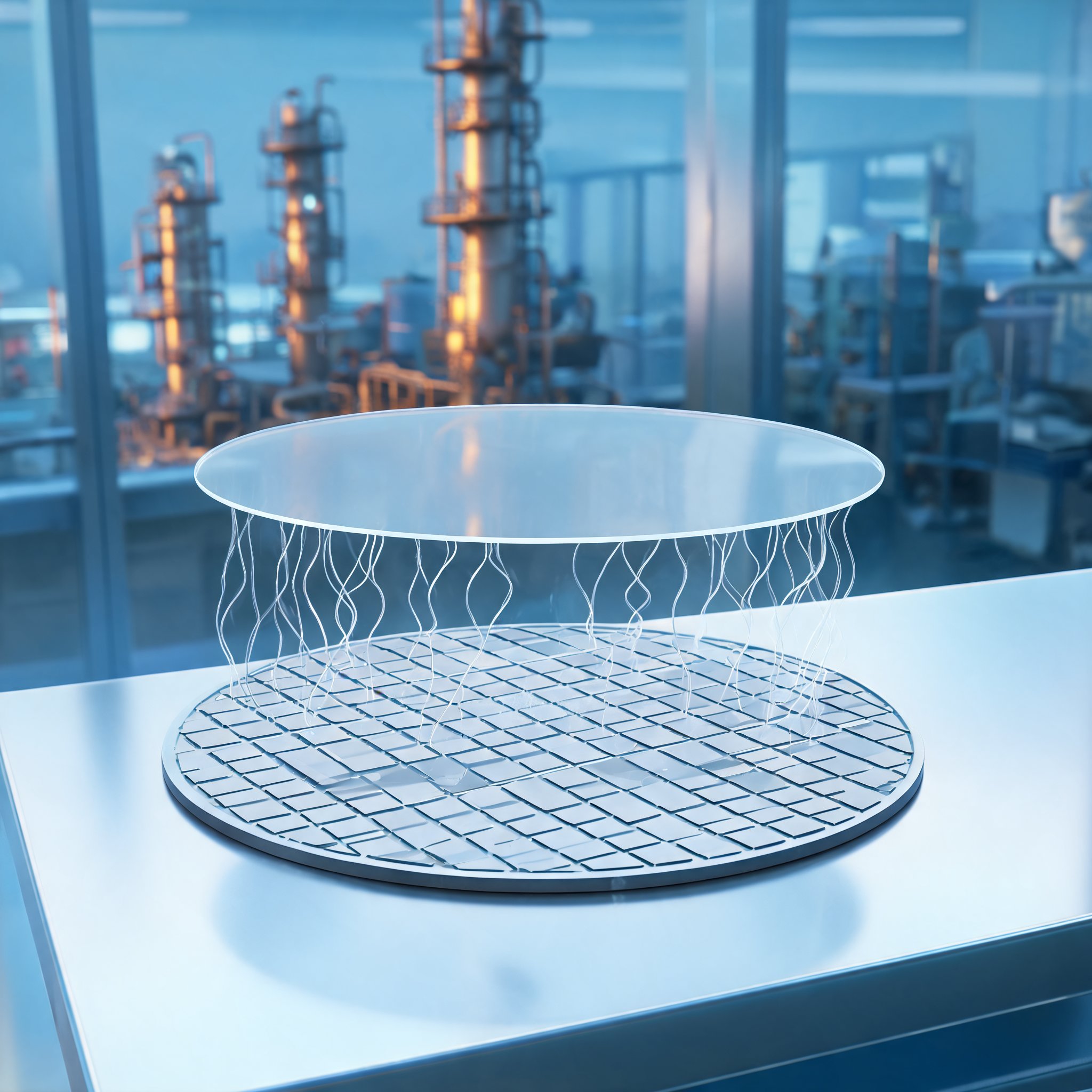
The deal supports Mitsui Chemicals’ VISION 2030 plan, which combines a specialty chemicals pillar with a Basic & Green Materials pillar centered on petrochemicals. Mitsui Chemicals said JSR’s advanced photoresists, customer base in semiconductors and optical fields, and global reach make JSR a core part of its ICT Solutions domain. The company plans to combine its MITSUI PELLICLE products and JSR’s advanced photoresists in front-end processes, and ICROS Tape and thick-film resists in back-end processes. It targets annual incremental profit of about ¥40 billion, or $253 million, by fiscal 2035 from growth and cost synergies.
Portfolio and financing moves
Mitsui Chemicals first said in May 2025 that it would consider splitting off its Basic & Green Materials business. It will now add its Mobility Solutions business to the scope, aiming to form a polymer science company with an integrated polymer chain spanning upstream petrochemicals and downstream functional polymers. It also plans to become more asset-light in underperforming businesses, improve its cash conversion cycle and sell shareholdings. Along with JSR’s review of its non-core life sciences business, Mitsui Chemicals expects benefits representing business value of ¥350 billion, or $2.2 billion, or more.
Funding will come from a ¥1.64 trillion, or $10.4 billion, bridge loan from principal financial institutions and DBJ’s ¥200 billion investment. Net debt to EBITDA is expected to temporarily exceed four times after closing. To protect an A-category credit rating, Mitsui Chemicals plans to refinance the bridge loan within one year of closing using bank loans, bonds and equity. It aims to have the equivalent of ¥300 billion, or $1.9 billion, recognized as equity by rating agencies, cap common share issuance including treasury shares at ¥150 billion, or $948 million, and add ¥300 billion of mezzanine financing, of which 50% is assumed to count as equity.
Registration, subsidiaries and timing
Mitsui Chemicals filed a shelf registration on Nov. 9 for up to ¥150 billion of common shares. It becomes effective Nov. 17, 2026, and runs through Nov. 16, 2028. Proceeds will go toward partial repayment of the bridge loan. SMBC Nikko Securities and Mizuho Securities are expected to be the primary underwriters.
Four JSR affiliates will become specified subsidiaries of Mitsui Chemicals: Inpria Corp., KBI Biopharma, Inc., JSR North America Holdings, Inc. and JSR Life Sciences, LLC. JSR reported revenue of ¥440.7 billion, or $2.8 billion, consolidated operating profit of ¥40.5 billion, or $256 million, and profit attributable to owners of ¥59.3 billion, or $375 million, for the fiscal year ended March 2026.
The transaction is subject to competition-law and foreign-investment approvals in Japan and overseas. Mitsui Chemicals aims to close in the second half of the fiscal year ending March 2028 and expects the impact on results for the fiscal year ending March 2027 to be minor. Currency conversions use an exchange rate of ¥158.2 per $1 on Nov. 9, 2026.