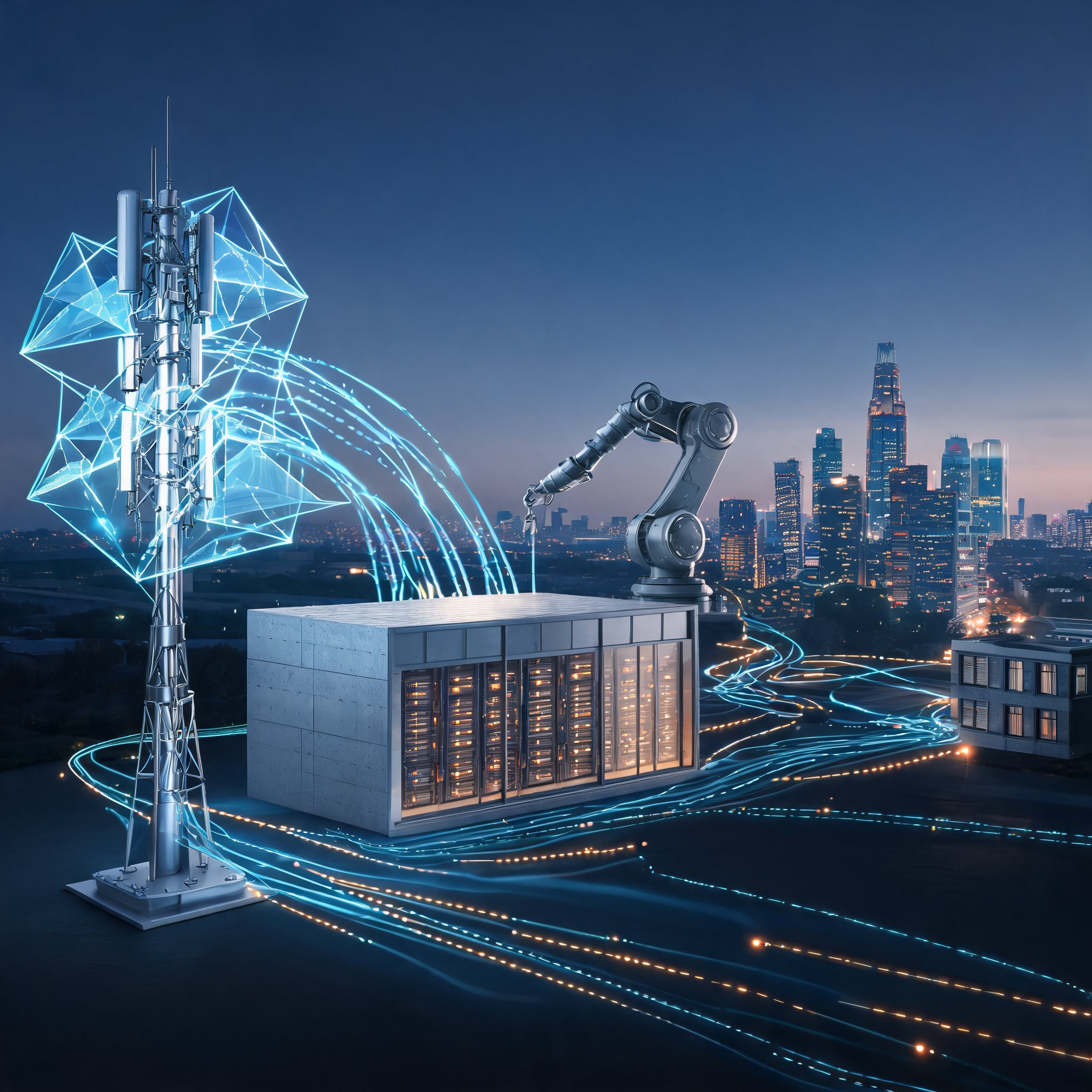
Nokia and NVIDIA are moving AI-RAN from reference designs and lab work toward live 5G preparations. Nine operators across Europe, the Middle East and Africa are now building or expanding NVIDIA-powered infrastructure, and Nokia is running anyRAN trials with BT, Deutsche Telekom, Elisa and Orange. Nearly 20 operators have publicly announced AI-RAN collaborations built on Nokia's anyRAN software and NVIDIA's Aerial RAN Computer, a wider group than the nine described as building or expanding infrastructure.
The reference stack combines Nokia's anyRAN software with NVIDIA's Aerial RAN Computer. CUDA, Nemotron open models and Agent Toolkit are embedded in Nokia's Autonomous Networks Suite and in third-party operations software from Cisco, TCS and NTT DATA. Dell, QCT and Supermicro supply ARC-ready servers, while Red Hat OpenShift provides the cloud-native foundation. Stacking those elements into one design is intended to shorten integration work for operators.
The distinction between announced collaborations and infrastructure being built matters. Public announcements signal intent and ecosystem alignment; building or expanding NVIDIA-powered infrastructure is a more concrete commitment. The nine-operator figure covers Europe, the Middle East and Africa, while the nearly 20 figure includes a broader set of public AI-RAN collaborations. The gap between the two numbers shows broad vendor support but a narrower base of operators moving into deployment.
Why put inference in the radio network
The engineering argument rests on assets operators already control: land, power and shell space at network sites, plus spectrum and fibre. Adding accelerated compute at centralised, metro and cell sites allows operators to serve AI models closer to the machinery, emergency responders and handsets that consume them. It also allows the radio itself to run inference, rather than sending all workloads to distant data centres.
The measurable evidence disclosed so far is narrow. Lab measurements from Deutsche Telekom and Nokia put typical uplink throughput improvement for AI-based channel estimation at around 10 to 15 percent. That is a useful gain, but it is a lab result for one function, not proof of a broad commercial return on a distributed compute build-out. The companies present AI-RAN as a platform for multiple workloads, not a single radio feature.
Backhaul becomes the constraining variable once inference moves outward to metro and cell sites. Nokia's 800G coherent pluggables indicate the capacity the company expects operators to need between sites. Compute at the edge is only useful if the network can move training data, model updates, inference requests and results reliably; otherwise the distributed architecture shifts the bottleneck rather than removing it.
Operator trials cover different workloads
Elisa completed what the companies describe as Europe's first AI-RAN field trial, running voice, mobile data and vision AI together on one accelerated platform over 5G. Orange is introducing voice intelligence services for enterprises and emergency responders. Deutsche Telekom is working on physical AI for industrial customers, and BT is preparing live trials in the UK. These are different workload mixes, which matters because AI-RAN's value will depend on whether one platform can support several services economically.
Nokia's Chief Technology and AI Officer, Pallavi Mahajan, framed the goal as networks that do more than connect: distributing intelligence, continuously optimising performance and enabling AI-powered services, including physical AI. She said the combination with NVIDIA and operators is intended to create a software-defined foundation that helps operators get more from spectrum today while opening a path toward autonomous, AI-native 6G. Those are development goals, not demonstrated commercial outcomes.
NVIDIA founder and CEO Jensen Huang described telecom networks as infrastructure that carried the world's conversations and will now also carry its intelligence. He said leading operators are turning land, power and connectivity into distributed AI infrastructure, bringing intelligence closer to industries, people and robots. With Nokia, he said, accelerated computing is being extended into the radio network itself as a foundation for AI-native 5G.
Integration gains and strategic dependency
The combined anyRAN, ARC, CUDA and Nemotron reference design shortens the integration path, but it also ties operators to NVIDIA's programming model at the radio layer, with Nokia's RAN software sitting above it. Cisco and Nokia are both folding Nemotron open models into software used to run autonomous networks, extending that dependency into operations tooling. Operators may gain a faster route to AI-RAN, but they also concentrate more of their software stack around one accelerated-computing ecosystem.
The commercial question is who pays and who captures the value. Until AI-service revenue materialises, operators carry the financing for distributed compute and backhaul. Suppliers of accelerated compute and RAN software hold the layer where incremental value would accumulate. That does not make the architecture unattractive, but it means operator business cases must be built on incremental spectrum efficiency, new enterprise services or both, rather than on the assumption that AI-service demand will arrive quickly.
The disclosed checkpoints cluster in 2027. BT's Birmingham live trial is slated for then, alongside Deutsche Telekom's field trials and Elisa's distributed deployment with commercial AI-RAN services. Those dates suggest that the current phase is still about integration, field validation and service design. AI-RAN now has a technical reference design and a group of operators willing to test it; the unresolved tests are backhaul economics, multi-workload performance and whether customers will pay for intelligence delivered at the radio edge.