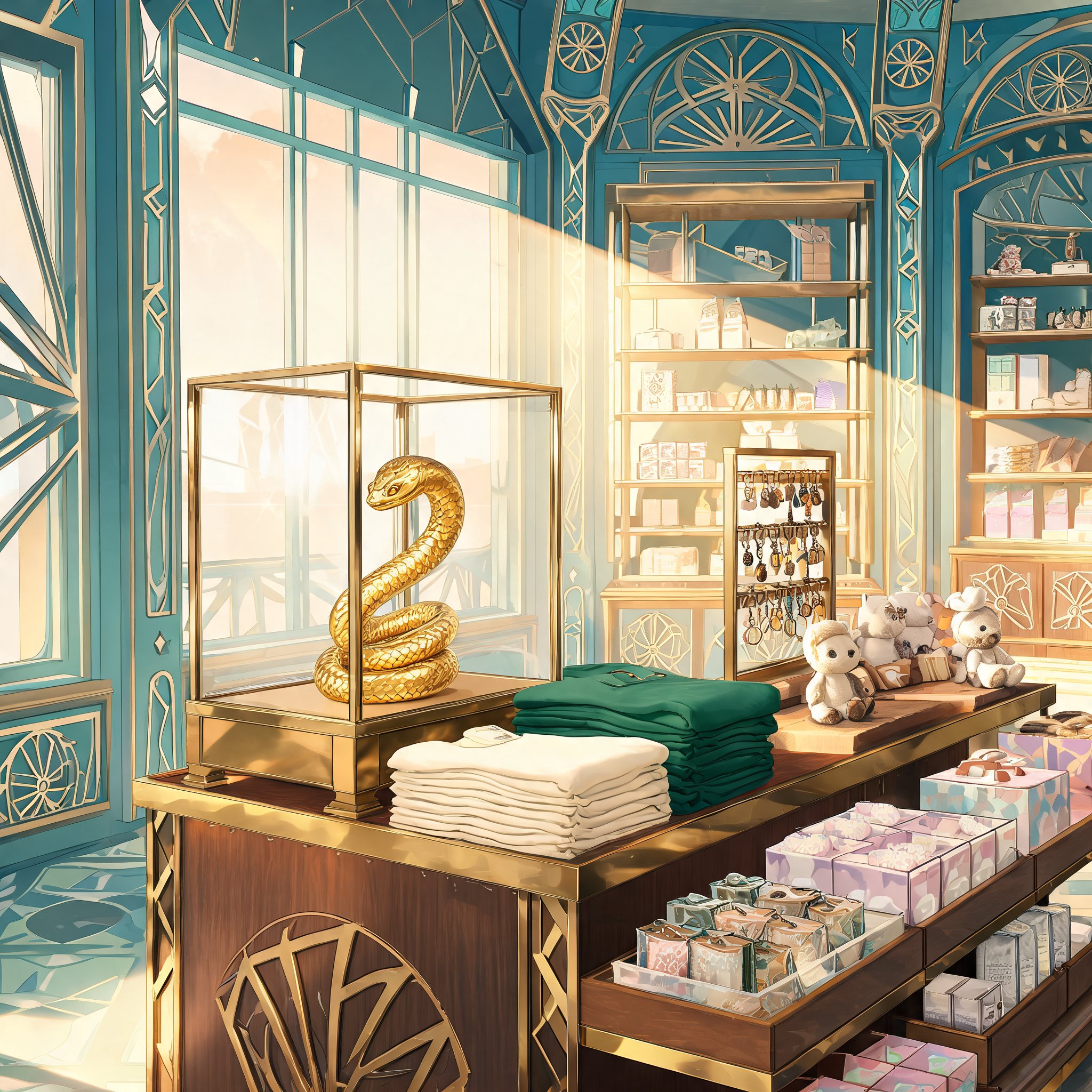
At 130 years old, Blackpool's Pleasure Beach is best known for its traditional seaside atmosphere, wooden roller coasters, the Big One and its shows. Less visible, but increasingly important, is its retail operation. Damian Jackson, head of retail, oversees stores, e-commerce, ride photography and merchandise development. In an interview, he described a model in which retail is treated as part of the attraction experience rather than a gift shop bolted onto the exit.
Retail designed with the attraction
The flagship shop sits at the park's main entrance in the Casino building, supported by outlets across the site. Jackson says he works closely with Amanda Thompson from initial idea and concept through design brief, product development, sampling and final approval. The guiding principle is that a range should not simply put a logo on a product. Each range needs a reason to exist, a clear customer and an authentic connection to the resort.
The Aviktas range is the clearest example. Instead of producing items carrying the ride logo, the team built the merchandise around the attraction's visual world: its golden snake, emerald colouring, mythology and sense of mystery. Jackson presents this as evidence of why retail should be involved early in attraction development. The range included a limited run of 50 models priced at £250 each, which sold out. He says that shows there is a market for premium collectables when a product has authenticity, detail and a strong connection to the attraction.
A portfolio built around customer missions
Pleasure Beach serves a diverse audience within the same day: families on a first visit, school groups with limited spending money, teenage friends and couples, international tourists, lifelong fans and serious coaster enthusiasts. Their reasons for buying differ. A family may want a souvenir of the day, while an enthusiast may seek an accurate, collectable product tied to a ride. Teenagers may respond to confectionery, accessories and trend-led apparel, while heritage-minded guests often value nostalgia, craftsmanship and the stories behind the resort.
The portfolio includes impulse purchases such as confectionery, magnets, keyrings and badges; practical items such as bottles, bags and ponchos; fashion-led apparel and accessories; children's products and plush; and premium or limited-edition pieces for enthusiasts and collectors. It balances attraction-specific merchandise with broader Pleasure Beach branding, licensed ranges, playful products and heritage collections. Jackson argues that offering something for everyone does not mean unlimited choice. It means a carefully edited range in which every product has a purpose, a target customer and an appropriate price.
From archive material to licensed characters
Product development begins with a discussion between Jackson and Thompson about the attraction, its audience and the opportunity for a range. They consider the story, visual identity, emotional impact, fashion relevance and long-term importance within the wider portfolio. Different attractions call for different treatments. ICON lends itself to a clean, contemporary, fashion-led approach. Heritage attractions such as the Big Dipper and Grand National allow the team to draw on archive artwork, engineering details, nostalgia and guest memories.
Quality and detail are part of the brief: materials, colours, proportions, trims, embroidery, packaging and how a product will be presented in the shop. The team also considers intended customer, expected demand, price points, production quantities, lead times and sales locations. The final product must be creatively distinctive but also commercially viable.
Nostalgia carries particular weight at a resort that has been part of family traditions for 130 years. Pleasure Beach has an archive of attraction imagery, typography, posters, architecture and stories, which the team reinterprets through contemporary apparel, homeware and collectables. Jackson says the aim is not to make everything feel old-fashioned, but to use authentic history in a fresh and desirable way. Playful assets matter too: humour, colour, character and unexpected ideas make the portfolio more accessible to children, families and casual visitors.
Licensed brands such as Nickelodeon and Aardman require partnership between the resort, the IP owner and approved suppliers. Pleasure Beach follows brand guidelines and approval processes while considering how characters and stories are experienced at the park. Jackson says the strongest partnerships are collaborative: the licensor protects the brand, while the resort explains what visitors respond to and how products need to work in an attraction environment. To compete with online retailers, the resort aims for relevance and exclusivity through exclusive designs, attraction references, location-specific details and personalisation.
Operations, suppliers and the shop floor
Jackson is direct about the less glamorous side. Stock accuracy and product availability, he says, are among the least glamorous and most critical parts of the operation. A strong product cannot generate revenue if it is sitting in a stockroom, has not been reordered, is incorrectly priced or is unavailable where guests expect it. The basics include accurate deliveries, stock movement, replenishment, pricing, signage and daily compliance checks. Clear pricing builds trust, good housekeeping makes products more desirable, and effective replenishment prevents missed purchases.
Suppliers are treated as creative and commercial partners rather than simply manufacturers. Pleasure Beach shares the story, ambition and intended customer behind a range so suppliers understand what it is trying to achieve. A good supplier brings ideas, understands the brand, responds constructively to feedback and can translate an initial concept into a commercially viable product. Reliability matters across quality, communication, lead times, compliance, pricing and consistency.
On the shop floor, sales begin with products guests genuinely want, but presentation, location, storytelling, pricing and team confidence influence the decision to buy. Pleasure Beach uses a price architecture that lets guests enter a range at different levels, from a small memento to a premium collectable. It encourages trade-up by showing additional value through materials, detail, exclusivity, personalisation or a bundle. Product adjacencies also matter: a plush character may lead to an outfit, a ride photograph to a frame, and apparel to matching accessories.
Retail is also treated as entertainment. The resort wants shopping to feel like another chapter of the day, not an obligatory stop at the exit. That means considering retail during the planning of attractions, events and guest journeys, and using themed environments, demonstrations, displays, confectionery experiences, personalisation, ride photography and interactive selling. Retail spaces are meant to reflect their location, so a shop connected to a thrill ride should feel different from a children's character store or a heritage collection. Staff act as hosts, storytellers and brand ambassadors.
E-commerce extends the relationship beyond the visit. It allows enthusiasts to follow launches, previous visitors to reconnect with memories and remote customers to buy selected products. It also supports social media and email communication, seasonal campaigns and testing interest, while online purchasing behaviour offers insight into demand. Gift wrapping and personalisation add another layer by making a purchase feel more personal than a standard marketplace item.
What the model shows
Taken together, Jackson's account describes a retail strategy built less on volume than on integration. The first mechanism is early involvement: merchandise is strongest when it grows from an attraction's creative world rather than being applied afterwards. The second is segmentation: a tiered portfolio serves impulse buyers, families, fashion-led teenagers, heritage-minded visitors and collectors without pretending they want the same thing. The third is execution: stock accuracy, supplier reliability and staff knowledge determine whether a product idea reaches the guest.
The boundaries are also clear. Premium collectables depend on a specific audience and convincing authenticity; traditional souvenirs remain important but must evolve; and exclusive products must justify themselves against online convenience. Pleasure Beach's approach does not eliminate those tensions. It manages them by tying retail to the visit, defining each range's customer and treating the shop floor as part of the experience.