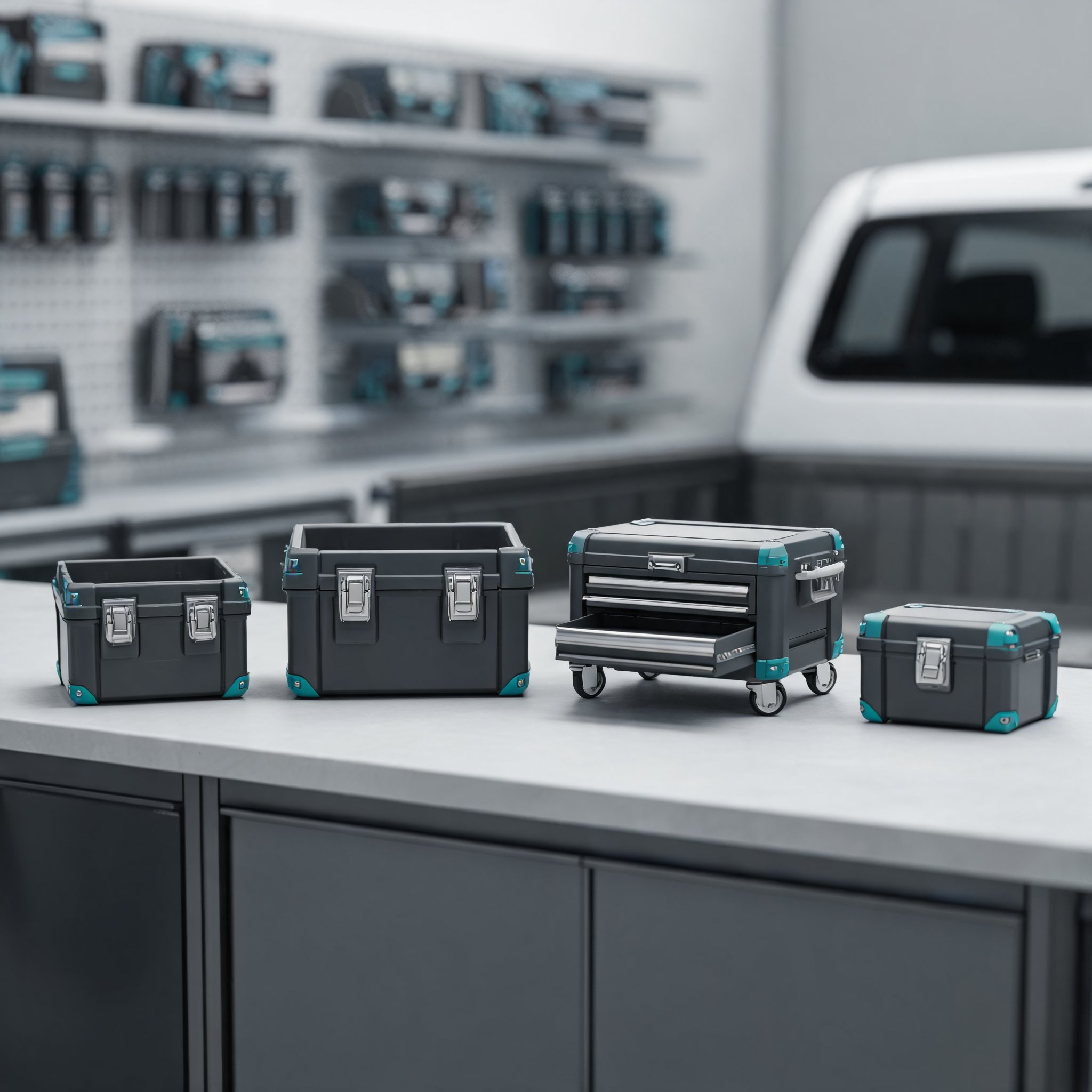
Recent influencer reports indicate that Makita’s smaller MakTrak tool boxes are expected in the United States in time for the holiday shopping season. The arrival would mark a second, compact-focused wave for MakTrak, about two years after the system first launched in the U.S.
The expansion is reported to include new open-top crates in shallow and deep sizes. Earlier compact MakTrak additions include a rolling tool box, a rolling drawer tool box and a smaller accessory box. The new crates would add more options for users seeking a smaller storage format.
Makita has not yet said whether the MakTrak products launching in the U.S. will be made domestically or imported. Photos shared online show some new MakTrak boxes made in China, which could reflect a strategy of producing near the markets where products are sold. The report presumes, but does not confirm, that the U.S.-bound products will continue to be made in the U.S.
A firsthand observation in the report noted full-size MakTrak boxes covered in a thick layer of dust at a Home Depot. That is anecdotal, but it raises the possibility that the “fits in your pickup truck” format has had a cautious reception and that a more conventional, smaller form factor could find more buyers. No drawer tool boxes have been seen beyond the new rolling base unit; the report suggests they might arrive in a later wave.