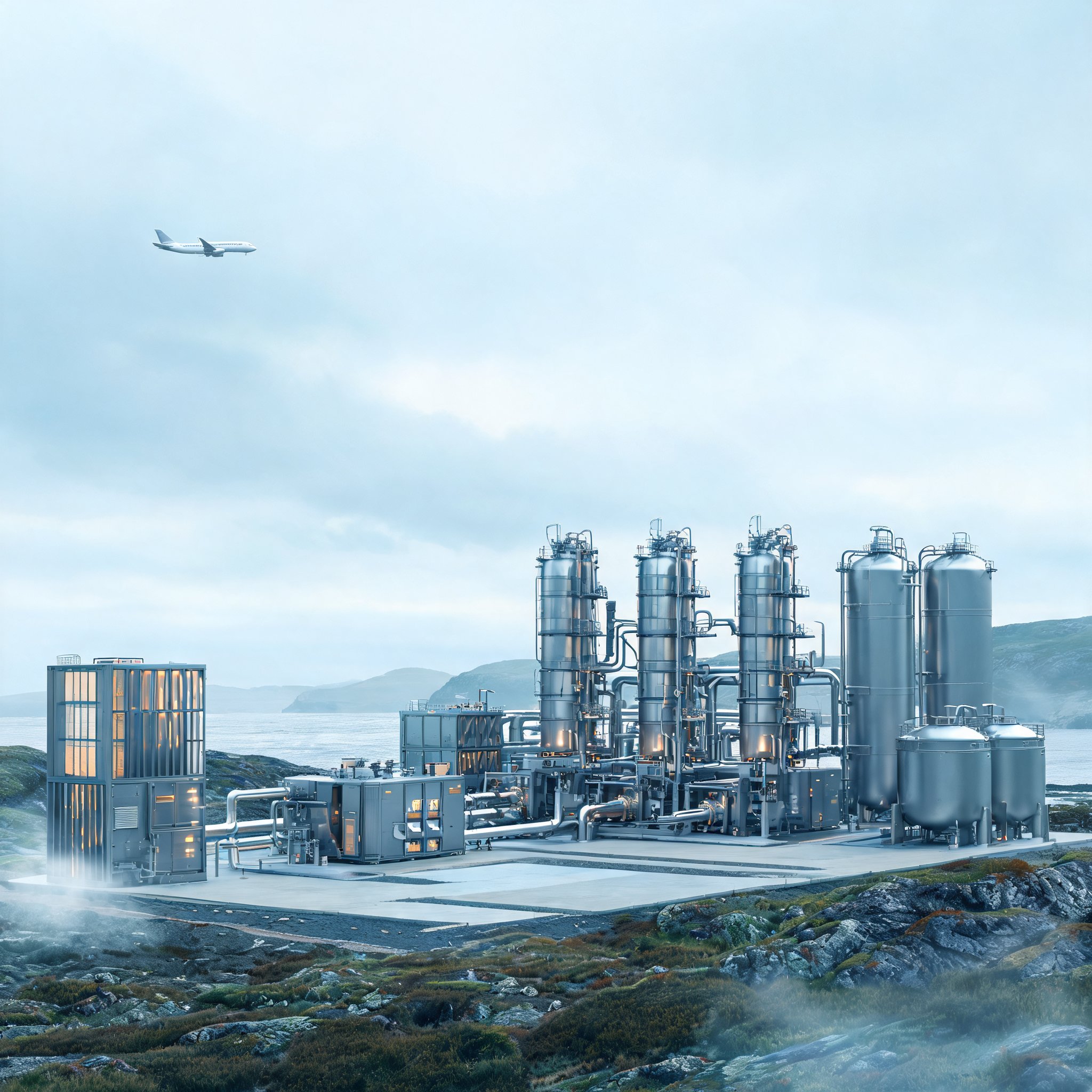
Topsoe A/S and Sasol Ltd. have signed a license and engineering agreement with Alby PtX AB for the planned e-SAF facility in Alby, Sweden. The agreement covers their integrated gas-to-liquid technology, known as G2L, for producing sustainable aviation fuel from renewable hydrogen and captured carbon.
G2L combines Topsoe's eREACT and hydroprocessing technologies with Sasol's low-temperature Fischer-Tropsch, or LTFT, technology. According to the companies, eREACT will enable synthetic gas production. Hydroprocessing and LTFT will then upgrade synthetic hydrocarbons into aviation fuel. The configuration is designed to support production of approximately 66,000 metric tons of e-SAF annually.
Technology scope and project status
The companies will provide the licensor package, technical expertise and capabilities to support development of the facility. Alby PtX is advancing the planned project, and the companies said the agreement supports its next stage of development.
Topsoe Chief Commercial Officer Yassir Ghiyati said scaling e-SAF production is important for Europe's energy resilience, fuel supplies and aviation decarbonization. Sasol's Sarushen Pillay said the project draws on decades of Fischer-Tropsch experience and aims to combine proven technology with collaboration to move e-SAF toward commercial reality.
Andreas Schmid, chairman of Alby PtX and an executive director at Prime Capital AG, said the combination is intended to use renewable power and captured carbon efficiently while maximizing aviation fuel output. Topsoe and Sasol said the Alby agreement follows recent joint agreements with HDF Energy, Bharat Petroleum and Allied Biofuels.