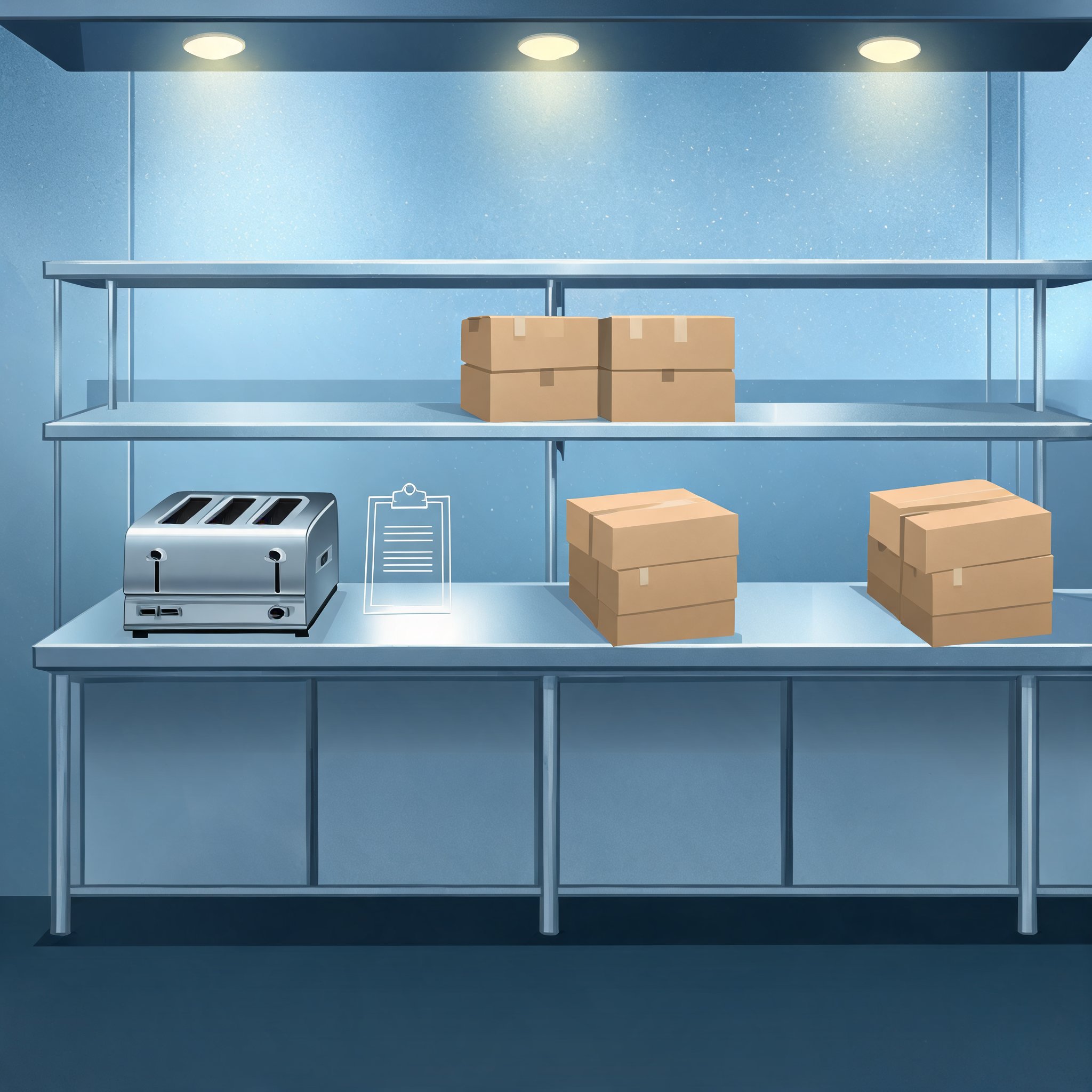
Rolling out new equipment across a multi-unit restaurant brand takes more preparation than ordering units and booking installs, according to Bryan Musgrove, divisional senior director on national accounts for TriMark USA, who has worked on numerous equipment rollouts tied to new menu items.
Musgrove lays out three practices he says make a rollout run more smoothly: a location-by-location playbook, a schedule built around manufacturer lead times, and delivery packaging consolidated per site.
Map each location before ordering
Musgrove cites a brand that needed new toasters to add toasted sandwiches to an existing breakfast lineup of biscuits and wraps. The complication was not the equipment but the sites. In some locations electrical capacity was already maxed out; in others, a small mall or urban unit had no counter space for a toaster, forcing the operator to free up room with shelving or an additional table — a change that affects workflow.
A playbook, in his account, sorts locations that are plug-and-play from those that need extra support, so the differences surface before units arrive rather than during installation.
Build the timeline around the manufacturer
Schedules, he argues, should follow production capacity rather than the desired launch date. His example: a manufacturer may be able to produce 200 units, but the relevant question is how long that takes. At 10 units a week, the job runs 20 weeks. A split delivery is also possible — inventory covering the first 50 units, then a wait of roughly eight weeks for parts sourced overseas before the balance is completed.
When a menu item is tied to a marketing campaign built around a particular season or occasion, he recommends working backward from the launch date to a timeline the supply chain can actually meet.
Consolidate smallwares into one package per site
Instead of shipping smaller wares to each location in their original boxes, Musgrove suggests asking the dealer to consolidate and repackage them into a single package per location. TriMark did this for a brand adding macaroni and cheese to its sides lineup, which required visual holding cabinets, pans and serving scoops in several sizes. The items arrived as one package per location, complete with instructional materials and exterior labeling so managers knew exactly what each delivery contained.
What the approach is meant to deliver
Musgrove frames the three steps as a way to keep a rollout smooth from site assessment through delivery. His stated expectation is that a launch executed this way generates buzz for the new item and increases traffic; it is presented as the intended result, not a measured one.