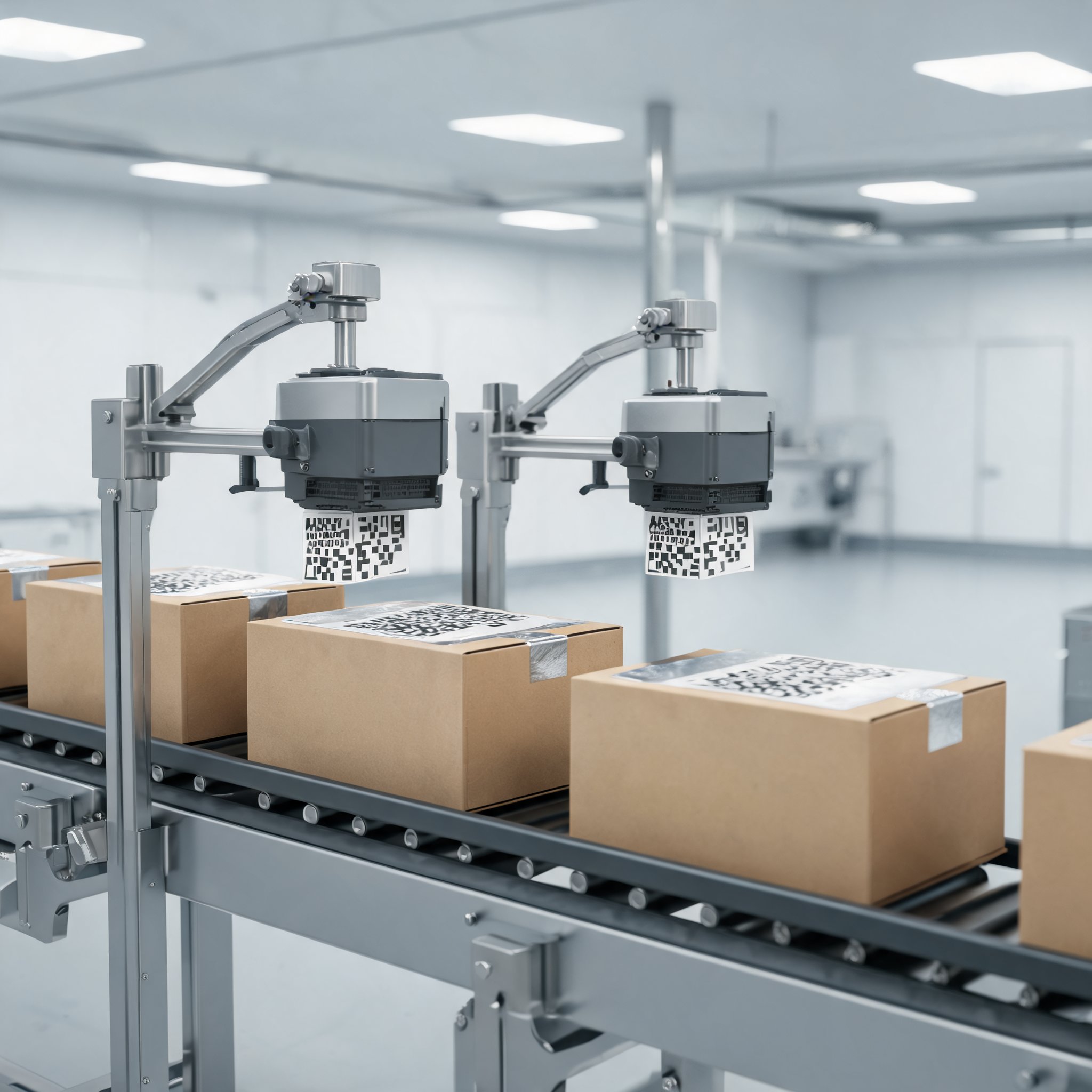
Videojet Technologies has launched two thermal inkjet printers, the Videojet 8530 and the Wolke m620 touch, for high-resolution coding on boxes, cartons, foil, labels and other packaging across several industries.
The company says both printers can produce clear, fast-drying 2D codes at item and case level, including QR and DataMatrix codes, lot numbers, expiration dates, logos and other variable data. Print resolution is up to 600 x 600 dpi.
Applications and integration
Videojet is targeting fast-moving packaging environments where code quality and readability need to remain consistent. The intended industrial sectors include cosmetics, food, beverage and electronics. The Wolke m620 touch is specifically aimed at pharmaceutical and medical device manufacturers, where it is designed to handle high-resolution traceability codes, highly readable barcodes and fast data processing for demanding serialization applications.
Both printers are designed to fit into existing thermal inkjet environments and support standard communication protocols, which Videojet says should simplify upgrades and reduce engineering effort. The systems use solid-state designs with no moving parts, an approach intended to minimize maintenance, support production uptime and allow clean, no-mess operation.
Software and code assurance
The Videojet SIMPLICiTY user interface includes Code Assurance features. Built-in rules and validation controls are intended to reduce coding errors, improve code accuracy and cut unnecessary printer interactions. A leader/follower configuration is also offered to expand print capabilities, allowing multiple printheads and controllers to work as a coordinated system.
For the Wolke m620 touch, a validation package is designed to support compliance with GAMP requirements. Both printers use Videojet software and digital tools, including VRS Remote Service, CLARiSUITE print job management software, and label design tools such as Velicity Design and CLARiSOFT. Videojet says these tools are intended to help manufacturers improve message accuracy, simplify job management and maintain greater control over coding operations.
“Manufacturers need coding technology that keeps pace with production while helping protect product quality, traceability, and operational efficiency,” said Marcy Vanderbei, global product manager for Videojet Technologies. “These new TIJ printers are designed to simplify high-resolution coding with systems that are easier to integrate, easier to operate, and easier to rely on, shift after shift.”
Market context
The launch follows Videojet’s introduction of the 1880 C continuous inkjet printer, which the company says is expected to reduce cleaning, service calls and unpredictable downtime for pigmented CIJ printing. Videojet also said the 1880 C is intended to deliver bold, high-contrast codes while offering operation and maintenance similar to a dye-based printer.
Separately, Domino Printing Sciences has introduced the Domino Cx150i, a direct-to-box piezo inkjet printer for coding onto porous substrates with ink made from vegetable oil. That printer is aimed at secondary packaging in food, beverage and general manufacturing applications.